Portfolio
A look at my recent website design portfolio, featuring website designing, SEO, and branding projects across different industries.
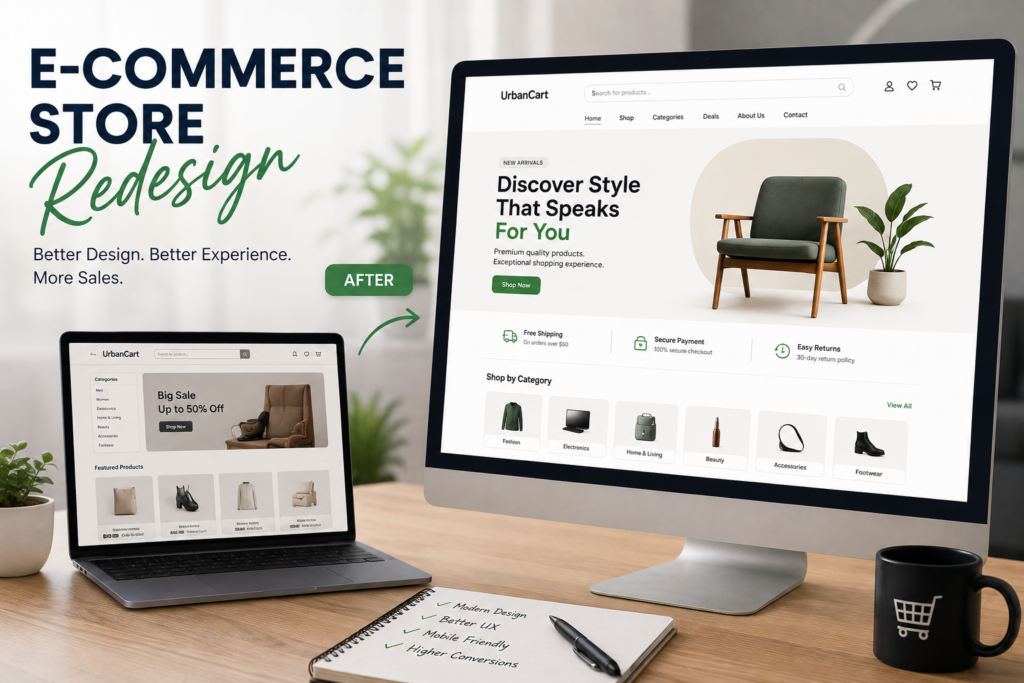
E-commerce Store Redesign
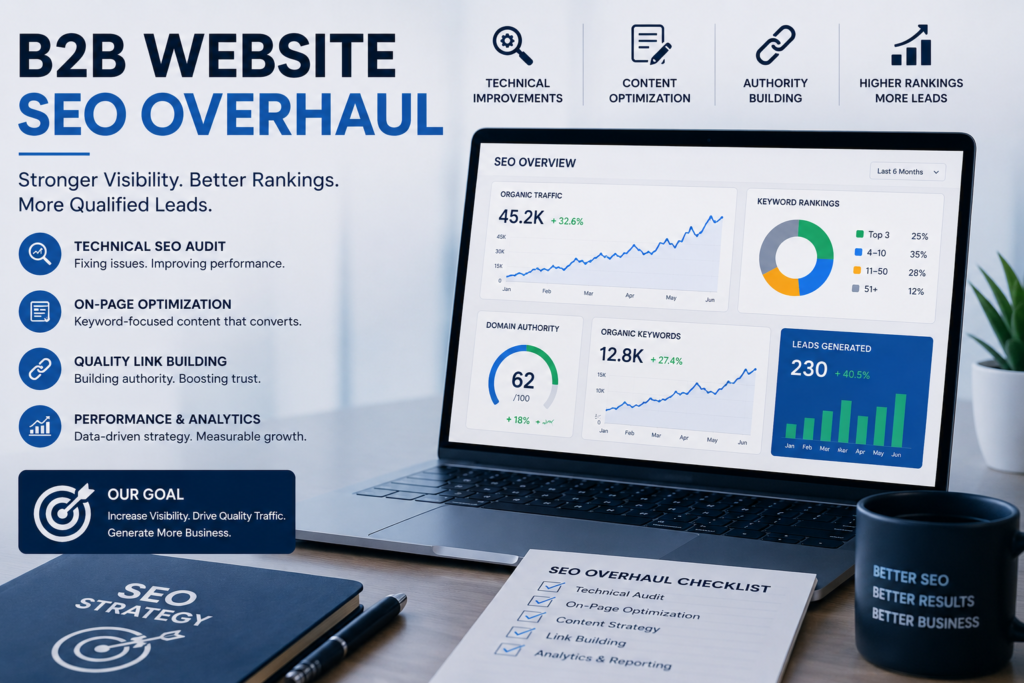
B2B Website SEO Overhaul
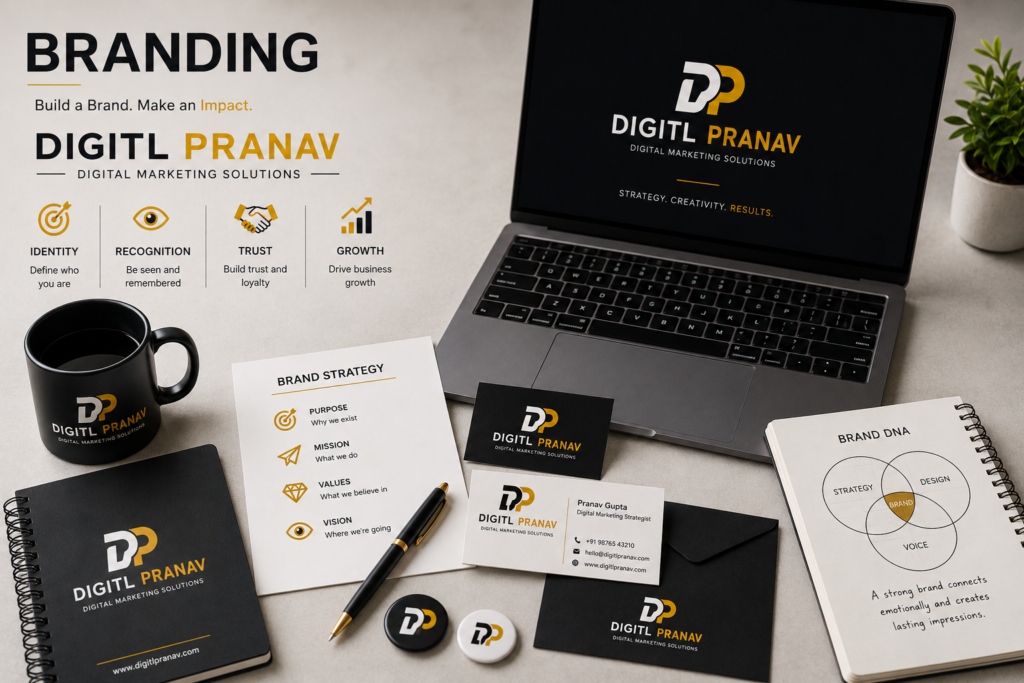
Complete Brand Identity

SaaS Platform Website
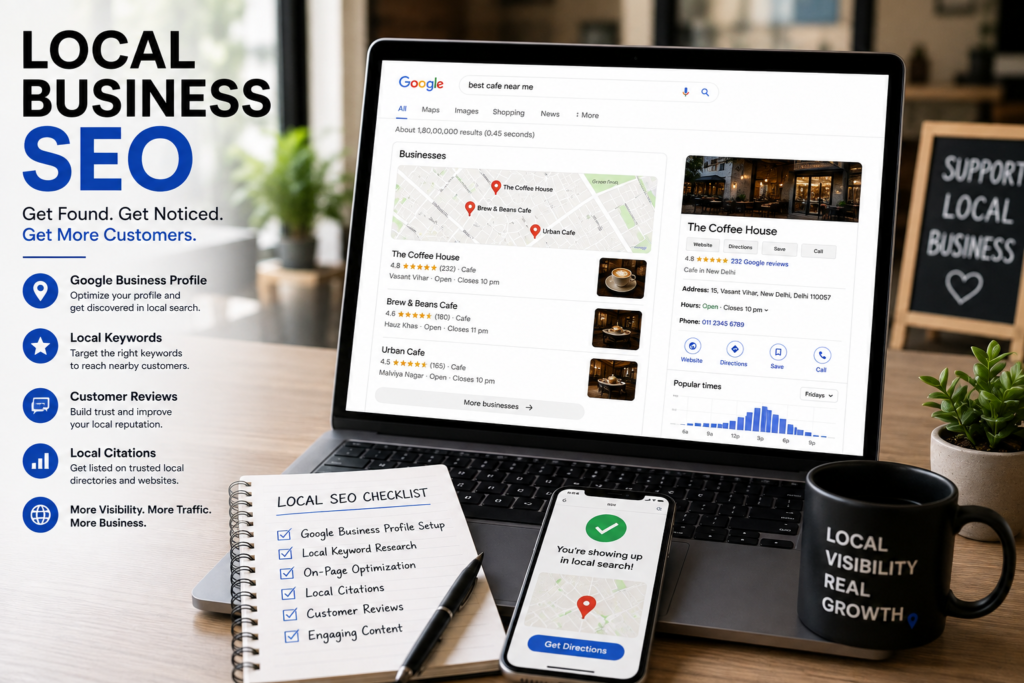
Local Business SEO
Social Campaign Design
Real Results Behind Every Project
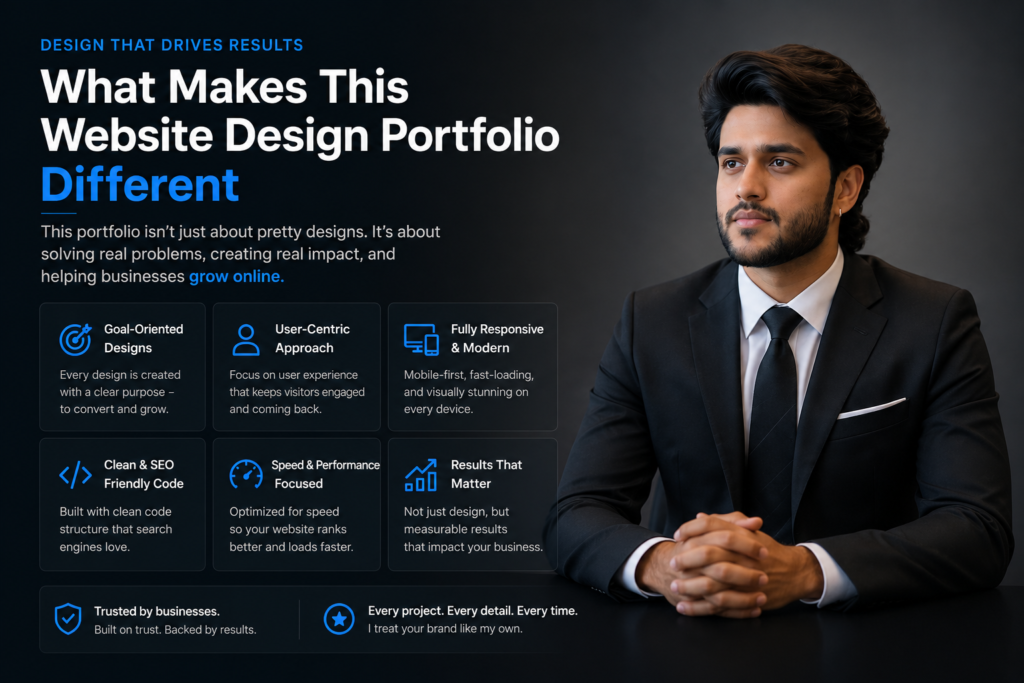
What Makes This Website Design Portfolio Different
Most portfolio pages are built to impress at a glance: big screenshots, a scroll-stopping layout, and not much else. This website design portfolio is built differently, on purpose. Every project shown here includes what actually happened after launch, not just how the finished site looks in a browser mockup. That distinction matters if you are trying to decide whether a designer can deliver results for a business like yours, not just a good-looking homepage.
Screenshots alone cannot tell you whether a site converts visitors into customers, whether it ranks for the searches that actually matter, or whether the client stuck around for ongoing work because the results held up over time. A website design portfolio without that context is really just a gallery, and galleries do not tell you much about how a project will go for your own business. What you are looking at here is meant to function more like a track record than a mood board.
The Story Behind Every Project in This Portfolio
Behind each entry in this website design portfolio is a business owner who took a real risk, whether that meant redesigning a site that was quietly losing them customers, or investing in SEO for the first time after years of relying entirely on word of mouth. None of these projects started with a clear, easy brief. They started with a conversation about what was not working, followed by research into competitors, customer behavior, and search intent before a single design decision got made.
That groundwork rarely shows up in a before-and-after screenshot, but it is the actual reason these projects performed once they went live. A polished layout built on the wrong assumptions about a business’s customers will still underperform, no matter how clean the design looks. In more than one case, the biggest change was not visual at all, it was restructuring the site around the two or three actions that actually mattered to the business, and quietly removing everything that was just taking up space.
How Each Website Design Portfolio Piece Gets Built
Every project in this website design portfolio follows roughly the same process, even though the end results look very different from one another. It starts with understanding the business and its customers, moves into keyword and competitor research, then into wireframes and structure before any real visual design begins. SEO is planned in from the start rather than bolted on after launch, which is part of why several of these projects saw meaningful traffic growth within months instead of years.
Design decisions get made with a purpose behind them: a button color chosen because it draws the eye where it needs to go, a page structure built around how customers actually search, not just what looks balanced on a grid. That discipline is consistent across every project here, regardless of industry or budget. Smaller projects get the same level of planning as larger ones, because the size of the budget rarely changes how much a business depends on its website actually working.
This website design portfolio spans e-commerce, local retail, business-to-business companies, SaaS products, and personal brand or agency work. That range is intentional. A checkout flow for an online store solves a completely different problem than a lead form for a local service business, and a portfolio limited to one industry cannot really show whether a designer understands that difference.
If you do not see your exact industry represented here, that is genuinely fine. The underlying approach, understanding customers, structuring a site around real search behavior, and designing with conversion in mind, applies across almost any type of business. What changes from project to project is the specific execution, not the underlying strategy. A restaurant and a software company need very different pages, but both need a site that is clear, fast, and easy to act on.
What You Will Not Find in This Portfolio
You will not find recycled templates with a new logo dropped in, and you will not find projects chosen only because they photograph well. Every entry here was included because it represents real work and a real outcome, not because it was the flashiest option available. Some of these sites are intentionally understated because that restraint is exactly what the business and its customers needed, not every project benefits from bold visuals or heavy animation.
What you will find is evidence of a consistent process applied to different problems, which is a far better predictor of how a future project will go than a single impressive screenshot ever could be. If a project on this page looks simple, that is usually because simplicity was the right call for that particular business, not because more could not have been done.
How to Use This Page Before You Reach Out
Rather than treating this website design portfolio as a menu to pick a style from, it is more useful as a reference point for a conversation. If a particular project resembles your industry or the problem you are facing, it is worth mentioning when you get in touch, since it gives a clearer starting point than a general request for a new website. If nothing here matches your situation exactly, that is fine too, the process described above applies regardless of what the finished site ends up looking like.
The goal of this page is not to sell you on a specific visual style. It is to show that the results behind each project came from a repeatable process, not a lucky one-off, and that the same process is available for whatever your business needs next.
If you have made it this far, you have already seen more of how these projects actually came together than most agency portfolio pages will ever show you. That transparency is intentional, because a website design portfolio is only useful if it helps you make a more informed decision, not just a more impressed one. Whether you are ready to start a project now or simply comparing options, feel free to reach out with a bit of detail about your business and what you are hoping to change.